Andura hasn't put anything out in months. For an artist who's been "pretty nonstop with it" for years — eight projects deep, music functioning as a diary he files in near-real time — a few months of silence is a statement in itself. He spent it on family, on friends, on cinematography. And then, today, the first release of a new chapter: "So Sure." A moody R&B record that starts as a question, flips itself halfway through, and ends having stopped asking.
The song is addressed to someone who ended things with total certainty and zero explanation. This conversation happened on release day. It has been lightly edited — the feeling has not.
How are you, mate?
I've been doing alright. Getting back into it a bit — I haven't made a song in a few months, and for the past few years I've been pretty nonstop with it.
A few months off after years of nonstop — was that a conscious break, or did life just pull you away?
Not necessarily conscious. My music really functions as my diary — keeping track of what's happened in my life, and usually I try to get it out as soon as possible so it's fresh. This year I've been focused on different passions: family, friends, cinematography. And a lot of my music comes from a sense of resentment or bitterness that sometimes I don't like to tap into. Of course, sometimes it's good for the music. "So Sure" starts out that way — and by the end it's leaning more toward acceptance.
That's a real thing to admit — that some of your best material lives in a place you don't like visiting.
It's something I've been sitting with, and it evolves. I've learned that healing isn't linear. It's not like, it's been a year, so I'm going to feel better. Sometimes I'll feel worse. The whole year after it ended, I was remembering the dates of specific things — comparing that time of year to the year before. The mind has a weird way of processing.
"Don't Try to Change My Mind"
Here's the record's power dynamic, and it's a wild one to build a song on: the entire hook — "tell me what you know that I don't, 'cause you're so sure" — is a man asking questions of someone who has already stopped answering. She arrived certain. He never got the evidence.
Where did "so sure" actually come from? Is the title about her certainty, or about the version of you that had to sit in all that doubt?
The thing that stood out to me, when I was in the situation I'm writing about — she told me, "Don't try to change my mind. I've made up my mind. Don't try to convince me otherwise, but I'm ending this." I felt blindsided, because I was genuinely happy, genuinely in love with this person. Her certainty about ending it — I just didn't know where it was coming from.
And I'm big on closure. Closure to me is understanding — if I understand something, I can walk away from anything. But if I'm left with no answer, I'm the kind of person that reflects on himself before pointing fingers. With that combination, you start searching for something that doesn't exist — looking for issues in yourself, wondering what you could have done better. It's an unhealthy cycle, and it takes time to heal from.
"If I understand something, I could walk away from anything. If I'm left with no answer, you start searching for something that doesn't exist."
I have to go straight to the line, because for me it's the whole song — "you'll articulate yourself when you tell me how you'll fuck me, and when it comes to asking help, couldn't even say you love me." Fluent in one language, completely mute in the other. Talk to me about writing that.
That final conversation felt very avoided. Not many words were exchanged, which was peculiar, because she also said she'd been thinking about it for a while. I have screenshots of her saying, "I feel like I'm falling, and my heart leads to you." But a lot of our relationship came down to some surface-level passion. Lust, for lack of a better word.
There's another lyric that stands out to me as the person who wrote it: "If I was a stepping stone, it'll get rockier from here on out." In her defense, you try to come up with explanations for her. Maybe I was just a stepping stone, and it benefited her to convince herself this was an actual thing. Maybe I didn't serve her needs. Maybe she didn't really like me in the first place. If it ever crosses her mind now, it's probably a regret thing — and that's something you just gotta move on with.
The Bridge, the New Man, and Performing Peace
The most composed moment on the record is the bridge — "I swear, I'm not upset, I just wish you had said it... and I saw your new man, and I see where that headed." The calmest bars on the song. Also, it turns out, the newest.
Is that acceptance you actually reached, or the version of you looking back and performing peace you didn't have yet?
There was some bitterness in the beginning, of course. Even now, I'm not going to glaze anyone. I'm a very confrontational person, which is apparent in the song — which is funny, because in real life I avoid confrontation. And that part — seeing that — actually happened while I was making the song. It was a late addition, and one of my favorite parts.
All I know is healing is not linear, so looking back doesn't necessarily mean anything to me. Some things carry on with you forever. That relationship will have shaped how I feel about romance until the day I die — standards, things you try to avoid, things you still want.
Say more about that — the standards part.
Your relationships have an effect on you. It's not that you care about that person specifically — it's like, dang, you've changed what I expect, what I look for in a person. Whether someone was good or bad to you, your standards go up if you care about yourself and know what you want. I've been hurt by how someone handled a situation, and I try to avoid that now. But there were also great things — aspects that made me so attached, that I want to feel again. That's the standard, on both ends.
When I first started making the song — "tell me what you know that I don't" — I was still kind of hoping I'd get one of the answers. By the end, I stop asking the question. With the beat switch and everything, it drills in that I've been leaning toward accepting it.
"When I first started making the song, I was still hoping I'd get one of the answers. By the end, I stop asking the question."
The Beat Switch
So let's talk about that switch — because the song does not end where it starts. The first half is moody, synth-drenched, nostalgic pop. Then the drums flip, the "Hey!" chant kicks in, and the same vocal suddenly sounds like it's walking out the door instead of standing in it. And the origin story involves a video game.
Did the switch come first, or did the lyrics dictate where the beat needed to turn?
The funny thing is, it was originally going to be synth-y, moody, nostalgic pop the whole way — Majid Jordan style, and inspired by Justin Bieber's new album, specifically "All I Can Take." Those little Michael Jackson-style ad-libs sprinkled in. I've always loved that sound. But at some point, it felt kind of boring.
And I do love a beat switch — I'm a Drake fan, he does it in almost every song. The lyrics leave a lot of room to breathe, so while I was singing I started adding ad-libs that weren't even in the song. "Tell me what you know that I don't" — pause — and your head fills it in: "Hey!" That's where the idea came from.
One of my favorite series is Persona, and Persona 3 has a song called "Color Your Night" — one of the best songs in video games, with that chant in it. Funny enough, one of the first songs I was ever going to make about this specific person was using that song — and it was going to be a really positive, endearing song. It came full circle to use it now, as one other way to find closure. I used the same sample for the "hey," then layered my own on top.
And it's the same vocal in both halves — I copied and pasted, didn't re-record anything. Just flipped everything underneath: upbeat, hip-hop drums, the opposite of the moody synth. Which coincides with the feeling: I'm a little bitter, a little resentful, and then — you know what, let me accept this a little more. Maybe not fully. But at least in a vacuum: I accept that I'm not gonna get that apology, that acknowledgment of what you did. Because who cares. That's kind of how it goes.
"It's the same vocal — I didn't re-record it. Just the mood underneath it changed."
Blue
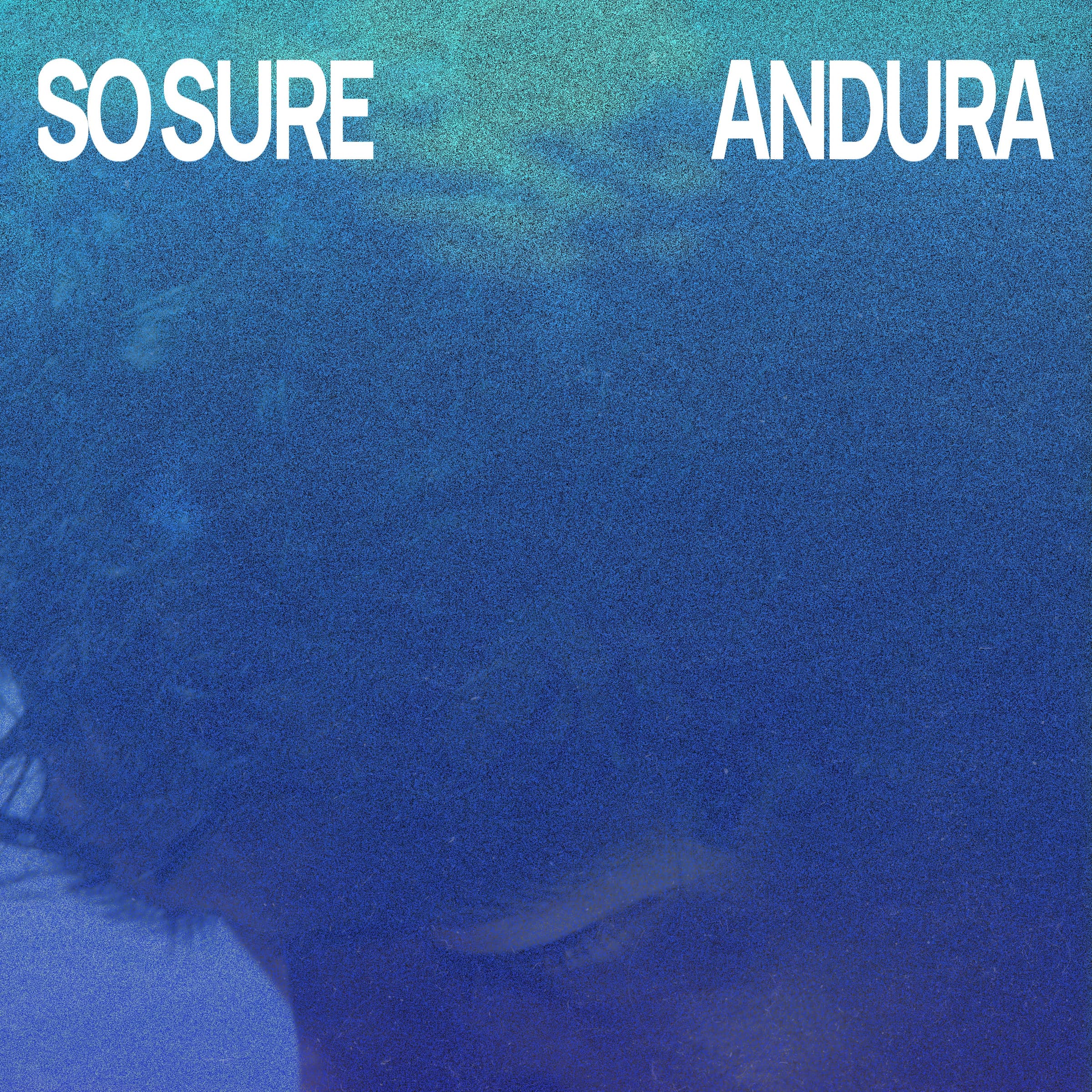
The cover: a figure submerged under a teal-to-blue gradient, looking down, half-surrendered to the water. If you know the rest of his archive, the water is not a coincidence.
Was that image in your head before the song was finished, or did it come after?
Man — water has always been a big thing. I'm a Cancer, a water sign. I'm not fully immersed in astrology or whatever, but I know my sign is completely accurate: emotional, creative, and I harness it in my stuff.
And with the specific person this song is about, I went to write a book — By the Long Island Sound. The Sound is a body of water, and the book was going to be written from the perspective of water — personifying it, making it the narrator retelling part of that chapter of my life. So me on the cover, looking down, pensive — it's almost surrendering to it. Even sonically, the song just sounds blue. And Persona 3's color scheme was blue too.
That book exists, by the way — By the Long Island Sound, a different discipline reaching for the same water.
Who It's For
Last one. If she never hears this song — if it's just for you and whoever else presses play — what do you want "So Sure" to leave behind?
I don't think she'll ever hear it. I know her sentiment about it, and I wish her the best. It's probably silly for me to still be speaking on it, however long after — but that's part of being an artist. We hold things for a while, tap into old memories and cherished thoughts to really extrapolate them. It really is for me.
I always tell people I don't make music to be famous or rich. It's been a necessity since I was a kid — it's how I get something out. Songwriting and vocal performance have always been the funnest part, because it's fun to manifest it: what's that feeling in my heart, that thought in my mind, and turn it into something shareable. And beyond that, something where people can enjoy the lyricism. Like starting the verse with something I wrote off the top of my head before it was even a song — "if I was a stepping stone, it'll get rockier from here on out." That's a great way to be bitter, you know what I mean? I think it's a unique gift to think like that. Most people don't even clock that type of thing — but I do, and I still give myself my credit.
For anyone else listening — some people just want the drama, the tea. But if I wanted to give a really good lesson: healing is not linear, and sometimes you are never going to get the closure from certain folks. So find it within yourself, and do what I did — spend time with friends and family, and hold space for other things that might come into your life.
"Sometimes you are never going to get the closure from certain folks. So it's important to find that within yourself."
"So Sure" opens as a man standing in a doorway demanding an answer, and closes as a man who has walked through it. The question never gets answered. It just stops getting asked. That's the trick of the record — the acceptance is never announced, it's arranged: the same voice, the same words, and a new beat underneath deciding it's time to move.
She was so sure. Now, finally, so is he.
Listen to "So Sure": Spotify · Apple Music · YouTube Music · Amazon Music · Tidal · Deezer
Get on the season: "So Sure" leads ANDURA SUMMER, the curated summer playlist on Spotify.
Explore the discography: Andura in the archive